
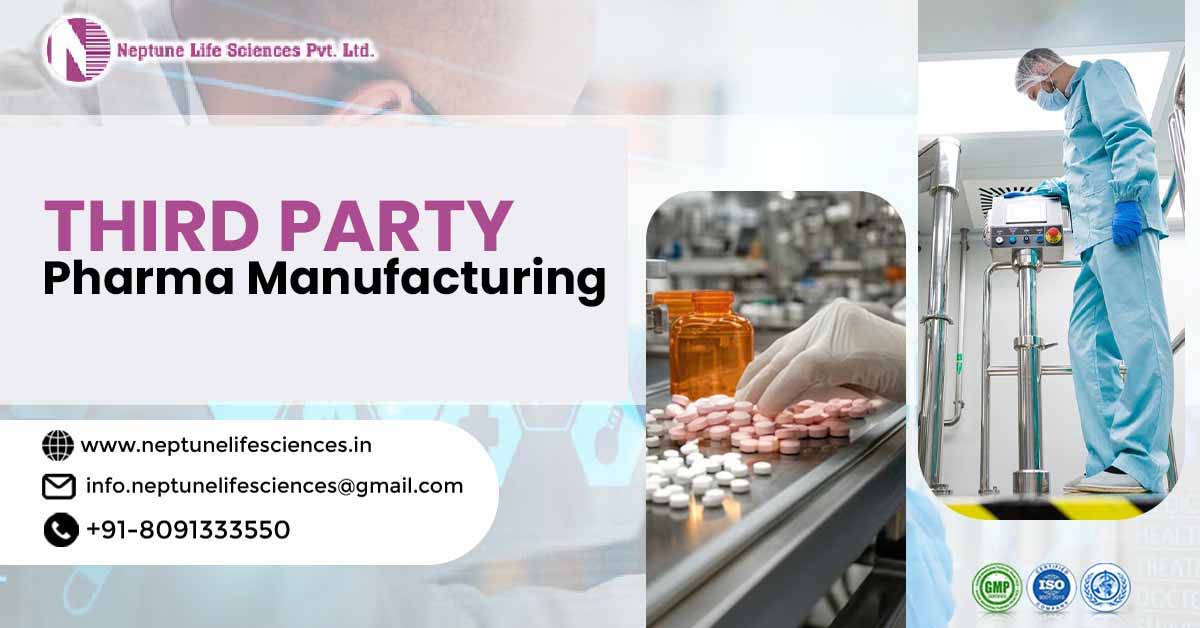
The healthcare industry in India is expanding at a rapid rate in 2026. As a result, the concept of third party pharma manufacturing has become a common phenomenon for young entrepreneurs who want to venture into the industry. This strategy has helped many pharmaceutical brands launch their products successfully in the market while focusing on marketing strategies. It has also been projected that the pharmaceutical industry in India is expected to reach the figure of ₹4,50,000 crores by the end of this year. Such growth will make this industry a profitable option for entrepreneurs.
Partnering with a reputable pharma manufacturing company ensures the launch of products that meet international safety standards. Moreover, this business model also helps to reduce stress while allowing you to expand your market presence.
Process of Third-Party Pharmaceutical Manufacturing
To start with, a brand needs to choose a reliable portfolio of products, which can be manufactured by a professional third party pharma manufacturer. Initially, the client makes a mutual agreement and provides the necessary documents, including drug licenses and GST registration. After this, the pharmaceutical manufacturer starts the formulation of the products using the best quality raw materials in a sterile environment. A team of professional designers then starts the work on designing the products. This will need to be attractive as well as safe for public use. The production team then starts large-scale production under WHO GMP guidelines.
After this, each product goes through quality testing in modern laboratories, following which the products are dispatched to the desired destination with the necessary certification. This entire process of third party pharma manufacturing has helped many brands achieve success in a short time.
Investment Requirements for Third-Party Pharmaceutical Manufacturing
Initiating a business venture with pharmaceutical third party manufacturing requires proper investment planning. In 2026, you should consider the following five investment requirements.
- Lower Capital Entry: The initial investment required will be between ₹2 lakhs to ₹5 lakhs.
- No Infrastructure Costs: There are no costs incurred on land acquisition, heavy machinery, or construction of a factory.
- Variable Order Volumes: Small order quantities are used to maintain cash flow without holding large inventory levels.
- Product Approval Fees: There are only small one-time fees required to get products approved and trademarks registered.
- Marketing Focus: About 80% of the budget can be directed towards sales, distribution, and branding.
Benefits Associated with Third-Party Pharmaceutical Manufacturing
Cost-Effective Production Model
Engaging a third party pharma manufacturing firm allows the business to avoid the high labor and maintenance costs of an in-house operation. This offering customers a competitive price while maintaining high profit margins.
Access to Advanced Technology
Third party pharma manufacturing units are professional entities that use modern automated machinery and state-of-the-art research labs. This implies that the products offered are of high quality since the third party pharma manufacturing firm utilizes advanced technology.
Scalability and Flexibility
You can easily scale up or down your orders based on the current market demand. This implies that the business can easily expand its product portfolio without having to pay additional fixed costs.
Global Quality Standards
The third party pharma manufacturing firm can easily partner with other manufacturers that follow the WHO-GMP & ISO 9001:2015 guidelines for the manufacturing process. This implies that the products offered are of high quality since they are able to pass the test of the World Health Organization.
Management of Profitability in Third-Party Pharmaceutical Manufacturing
The profitability of the business can be managed by considering the costs of production and the sales strategies employed. In 2026, successful pharmaceutical third party manufacturing businesses are using data analysis to determine the products that are in high demand. Moreover, the business can also use a lean supply chain model that reduces the costs of waste disposal. The business can also invest heavily in maintaining long-term relationships with clinicians and retailers.
- Identify products that are profitable and have limited competition from local players.
- Monitor the inventory levels of the products to prevent expiration of the products.
- Negotiate low costs for bulk orders from the third party pharma manufacturer.
- Use digital marketing as a platform to reach a wider market at a lower cost.
Partnership with a Leading Third-Party Pharmaceutical Manufacturer in India
To become a market leader in the healthcare industry, a partnership with a reliable pharma manufacturing company is vital. Neptune Lifesciences is a premier pharmaceutical company that provides third-party pharma production services. The organization has state-of-the-art facilities in Baddi, which follow global hygiene practices for every batch of products. They also assist with innovative packaging, which makes the launch of the product seamless.
By choosing a leading third party pharma manufacturing partner, a brand will align itself with well-established standards of quality and reliability. Such an association will enable the brand to grow rapidly through the provision of expert technical support and large manufacturing capabilities. This avoids stock shortages during peak demand periods.
Conclusion
The pharmaceutical industry in India achieves effective expansion through third party pharma manufacturing. The strategy will avoid capital costs while providing access to high-quality products and advanced technological support. Following an effective strategy and utilizing effective inventory management skills can lead to significant profitability in 2026. The above discussion has covered investment requirements, associated benefits, and the importance of a trusted partner like Neptune Lifesciences. The selection of the right manufacturer is one of the most important determinants of success in the pharmaceutical industry. Therefore, initiation of the business should take place with emphasis on quality, compliance, and marketing strategies.
FAQs
How much time does the manufacturing process take?
Generally, the first order may take around 30–40 days to complete. However, repeat orders are often completed within 20 days.
Is customization of packaging materials allowed?
Yes, most pharmaceutical manufacturers offer customization of packaging materials and label designs to meet specific requirements and stand out in the market.
Is pharmaceutical manufacturing by a third party suitable for small startups?
Yes, it is considered relatively safer, as the investment required to start the business is less.
